
Choosing the right food for dogs and cats is not just a matter of preference; it is a long-term decision that affects health, behavior, and overall quality of life. In Iran, this decision is often more complex because pet owners must navigate a market shaped by imported brands, local alternatives, price volatility, and inconsistent availability. As a result, comparing dog and cat food brands based on both price and quality has become essential rather than optional.
Many pet owners face a common dilemma: affordable foods may raise concerns about ingredient quality, while higher-priced products are not always accessible or consistently available. Brand reputation alone does not guarantee suitability for every pet, and price alone does not reflect nutritional value.
This guide provides a structured comparison of dog and cat food brands in Iran, focusing on price versus quality. Instead of promoting specific brands, it explains how to evaluate value, understand long-term feeding costs, and make informed choices that balance budget, nutrition, and reliability.
Why Comparing Price and Quality Matters in Pet Food Selection
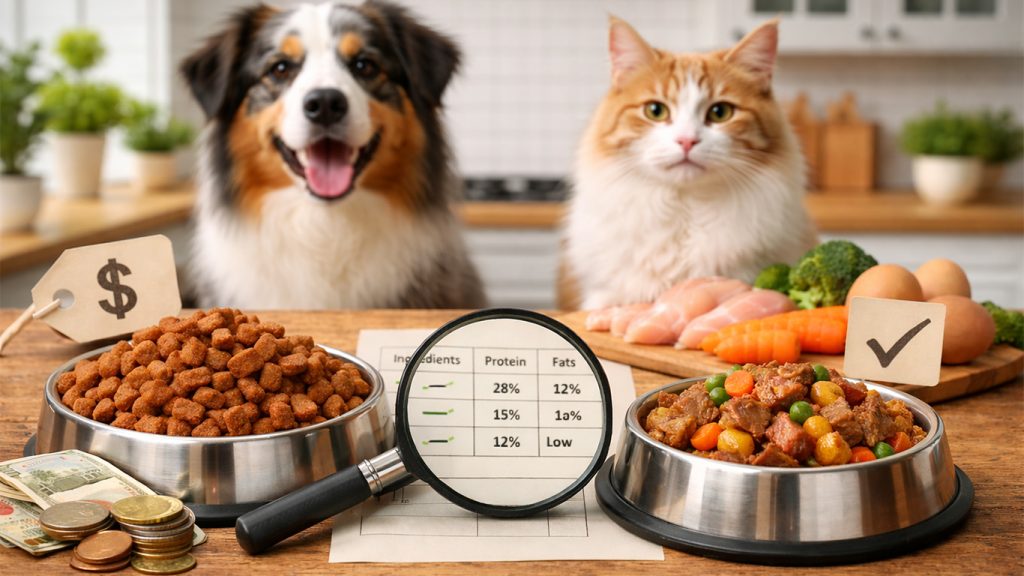
Pet food is a recurring expense, not a one-time purchase. Choosing based only on low price can lead to compromises in nutritional balance, ingredient quality, or digestibility. Over time, this may result in higher indirect costs, such as frequent food changes or reduced feeding efficiency.
On the other hand, choosing food solely based on brand reputation or premium pricing can also be misleading. Higher cost does not always translate into better suitability for every dog or cat. Some imported foods are priced high due to logistics and currency factors rather than superior formulation.
A price–quality comparison helps pet owners understand what they are paying for. It shifts focus from marketing claims to measurable factors such as ingredient sources, nutritional completeness, portion efficiency, and consistency. In an import-sensitive market like Iran, this balanced approach reduces risk and supports smarter, long-term feeding decisions.
Key Criteria Used to Compare Pet Food Brands
| Evaluation Factor | What It Means | Why It Matters in Iran |
| Ingredient Quality | Identified animal protein, minimal fillers | Imported foods expensive, fillers reduce value |
| Nutritional Balance | Meets AAFCO standards | Prevents long-term health issues |
| Manufacturing Transparency | Clear labels & consistency | Reduces risk of sudden formula changes |
| Portion Efficiency | Less food per meal | Lowers real monthly cost |
| Price Stability | Predictable pricing | Currency fluctuations are common |
| Availability | Regular market access | Avoids forced food switching |
Before comparing Iranian and imported pet food brands, it is important to establish clear and consistent evaluation criteria. These standards help remove bias and allow meaningful comparison across different price ranges.
Ingredient Quality and Nutritional Balance
Ingredient quality is one of the most important indicators of pet food value. High-quality foods clearly identify animal protein sources and provide balanced levels of fats, vitamins, and minerals. Protein quality matters more than protein percentage alone, especially for cats, which rely heavily on animal-based nutrients.
Excessive use of fillers or vague ingredient terms can reduce nutritional efficiency. Foods that meet recognized standards, such as AAFCO nutritional guidelines, are more likely to provide complete and balanced nutrition. Evaluating ingredients helps pet owners understand whether a food supports daily needs or simply meets minimum requirements.
Manufacturing Standards and Brand Transparency
Manufacturing quality affects safety, consistency, and trust. Brands that maintain stable formulations, provide clear labeling, and explain their nutritional approach are generally more reliable over time. Transparency about life-stage suitability and feeding guidelines also reflects responsible production practices.
Inconsistent labeling, frequent formula changes, or unclear sourcing can raise concerns, regardless of whether a brand is local or imported. Consistency matters, especially for pets that rely on the same food long term.
Price Stability and Long-Term Cost
The true cost of pet food is not just the price on the bag. Portion size, feeding efficiency, and price stability over time all affect monthly and yearly expenses. Some foods appear cheaper but require larger portions, increasing long-term costs.
In Iran, imported foods often experience price fluctuations due to currency and supply conditions. Local brands may offer more stable pricing, which helps with long-term planning. Comparing value means looking beyond unit price to overall feeding cost and reliability.
Comparison of Popular Iranian Dog and Cat Food Brands
| Aspect | Iranian Brands | Imported Brands |
| Price Range | Low to Mid | High |
| Availability | High & Stable | Inconsistent |
| Ingredient Transparency | Medium | High |
| Formula Variety | Limited | Wide |
| Price Stability | Predictable | Low |
| Long-Term Cost | Easier to manage | Harder to predict |
| Best For | Daily feeding, budget control | Special needs, short-term use |
Iranian pet food brands play a significant role in meeting everyday feeding needs. Their presence has expanded as pet ownership has grown and import challenges have increased.
Price Range and Affordability
Domestic pet food brands are generally positioned in the affordable to mid-range price segment. This makes them accessible to a wider group of pet owners, including households with multiple pets or limited budgets. Local production reduces exposure to foreign currency fluctuations, resulting in relatively stable pricing.
Affordability is one of the strongest advantages of Iranian brands. For many pet owners, this stability allows consistent feeding without frequent brand changes, which is beneficial for pets’ routines.
Quality Strengths and Limitations
Iranian brands typically focus on general nutrition rather than highly specialized formulas. Many provide adequate protein levels and basic nutritional balance suitable for healthy adult pets. Improvements in formulation and packaging have increased consumer confidence in recent years.
However, limitations may include narrower product variety and less specialization for specific breeds or conditions. Ingredient sourcing and batch consistency can also vary between manufacturers. Careful observation of pet response is important when choosing local brands.
Comparison of Popular Imported Dog and Cat Food Brands in Iran
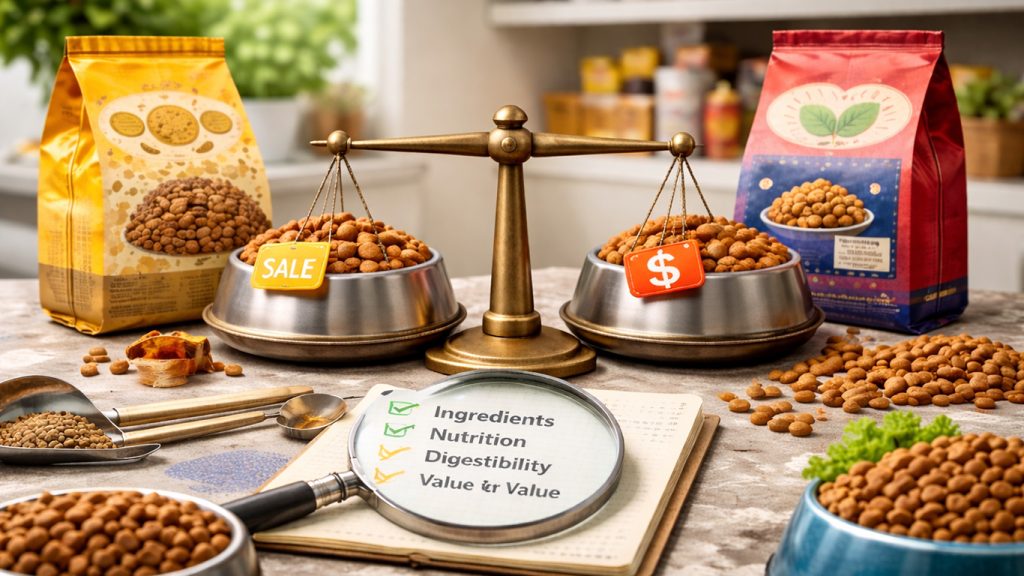
Imported pet food brands remain popular among Iranian consumers, especially those seeking specific formulations or international standards.
Price Positioning and Market Access
Imported brands are usually priced higher than local alternatives. This reflects not only production quality but also import-related costs such as currency exchange, logistics, and customs fees. As a result, these products often occupy the premium segment of the market.
Access can be inconsistent. Availability may vary over time, making it difficult to rely on a single imported brand for long-term feeding. This instability can affect both price and planning.
Quality Perception and Consistency
Imported brands are often associated with strict manufacturing standards and detailed nutritional research. They typically offer a wider range of formulas tailored to different life stages and dietary needs.
However, perceived quality does not always guarantee practical value. If a product cannot be purchased consistently or becomes unaffordable, its long-term usefulness decreases. Consistency and accessibility are key parts of overall quality in real-world conditions.
Iranian vs Imported Pet Food: Value-for-Money Comparison
| Factor | Iranian Brands | Imported Brands |
| Average Cost | Lower | Higher |
| Supply Stability | High | Medium to Low |
| Special Diet Options | Limited | Extensive |
| Long-Term Planning | Easier | Risky |
| Overall Value | Practical | Conditional |
When comparing Iranian and imported pet food brands, value-for-money depends on context. Local brands often offer better price stability and accessibility, making them practical for everyday feeding. Imported brands may offer more specialized options but come with higher and less predictable costs.
For many pet owners, a mixed strategy works best. Local food can serve as the primary diet, while imported food is used selectively when specific needs arise. This approach balances nutritional goals with budget control and availability.
True value lies in how well the food fits the pet’s needs, the owner’s budget, and the realities of the Iranian market.
Availability and Consistency as a Comparison Factor
Availability is a critical but often overlooked factor in pet food comparison. Frequent shortages or irregular restocking can force sudden food changes, which are not ideal for pets.
Iranian brands generally offer better supply consistency due to domestic production. Imported brands may disappear temporarily, making them less reliable despite higher perceived quality. Consistency supports routine, which is essential for healthy feeding habits.
How to Choose the Best Value Pet Food for Your Dog or Cat
The best value pet food is not necessarily the cheapest or the most expensive. It is the one that provides consistent nutrition, suits your pet’s needs, and fits your long-term budget.
Pet owners should monitor their pet’s condition, energy level, and digestion rather than relying solely on labels or reputation. Flexibility is also important in an import-sensitive market. Being open to alternatives reduces stress and dependency on unstable supply chains.
Comparing dog and cat food brands in Iran through the lens of price, quality, and availability leads to more confident decisions. With informed evaluation, pet owners can provide reliable nutrition without unnecessary cost or risk.